






BJP’s Suvendu Adhikari takes oath as West Bengal chief minister
Adhikari became the first Bharatiya Janata Party leader to hold the position.
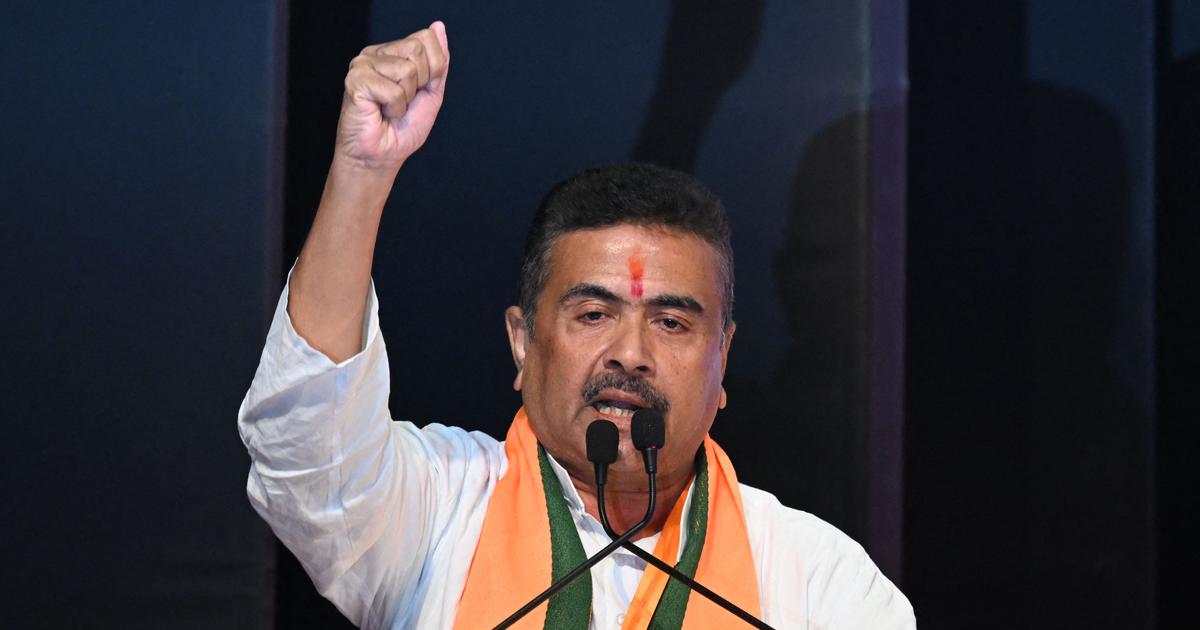
Bharatiya Janata Party leader Suvendu Adhikari on Saturday took oath as the chief minister of West Bengal. He became the first BJP leader to hold the post.
Adhikari was sworn-in five days after the BJP defeated the Trinamool Congress in the Assembly elections, ending the 15-year rule of the Mamata Banerjee-led party.
The Hindutva party won 207 seats in the 294-member Assembly. A party or an alliance needs 148 seats in the Assembly to secure a majority. The TMC won 80 seats.
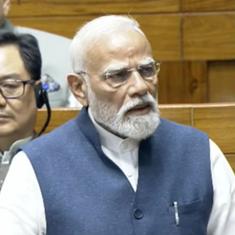
He was administered the oath of office by Governor RN Ravi during a ceremony attended by Prime Minister Narendra Modi and other leaders of the National Democratic Alliance.
Dilip Ghosh and Agnimitra Paul were among five BJP leaders who were sworn-in as ministers on Saturday.
Adhikari, who was a minister in the Banerjee government, quit the TMC and joined the BJP in 2020.
On Monday, he defeated Banerjee by more than 15,000 votes in the Bhabanipur constituency.
He had also defeated Banerjee in the Nandigram constituency in the 2021 polls, after which the TMC chief had been elected to the Assembly from Bhabanipur in a bye-election.
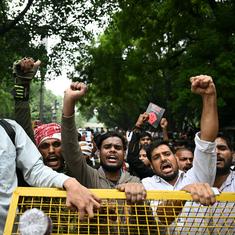
After the election results were declared on Monday, widespread political violence, and instances of alleged communal intimidation and vandalism were reported in West Bengal.
Also read:
- ‘Voted for change but this feels same’: Kolkata reels under political violence after BJP victory
- Watch: Do these Assembly election results signal the end game for the Opposition?
Votes in 293 constituencies were counted on Monday after the Election Commission ordered repolling in the Falta constituency citing “severe electoral offences”. The polling there will be held on May 21 and the votes will be counted on May 24.
On Monday, Banerjee claimed that the BJP had “looted votes in more than 100 seats”. A day later, she refused to resign as the chief minister, claiming that the TMC had “morally won” the polls even though the BJP had officially secured a victory.
Opposition leaders, including Congress’ Rahul Gandhi, on Monday supported Banerjee’s claims that there had been irregularities in the counting of votes.
The elections in West Bengal followed a special intensive revision of electoral rolls by the poll panel. By April 6, about 91 lakh voters, nearly 11.9% of the electorate before the process began, had been removed. Lakhs of cases challenging their removal from the voter list are pending before appellate tribunals. The exact number is unclear.
Edited by Nachiket Deuskar
Also read:
- In half the seats BJP won in Bengal, total SIR deletions outnumber victory margin
- SIR to CRPF: Five factors that helped the BJP conquer Bengal
